Mastering Movement and Positioning in Apex Legends: Pro Strategies for 2026
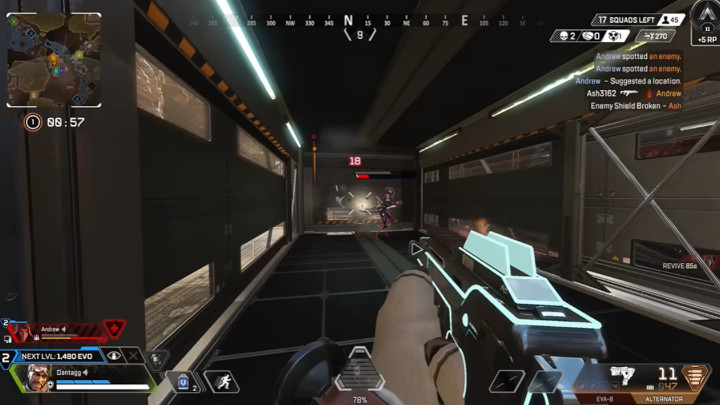
Movement and positioning can make or break your success in Apex Legends. With the game's 2026 meta heavily favoring mobility and dynamic positioning, mastering these elements has become more crucial than ever. Whether you're struggling to climb ranked or looking to dominate in competitive play, understanding the latest movement tech and strategic positioning principles will give you a significant edge.
The Evolution of Apex Movement in 2026
The movement meta in Apex has undergone dramatic shifts since the early days of simple slide-jumping. If you've returned to the game after a break, you'll notice that static, defensive play has given way to high-mobility skirmishes – a change that rewards technical skill and quick decision-making. Two game-changing developments stand out in 2026's movement landscape:
Mantle Boost: The New Must-Master Tech
Mantle Boost has transformed from a niche exploit into an official, developer-supported mechanic. This technique allows you to launch yourself vertically after mantling an object, creating powerful repositioning options that weren't previously possible. Players who can chain Mantle Boosts with other movement techniques gain a massive advantage in fights.
Many casual players aren't even aware this mechanic exists, despite it being completely legitimate since the Season 24 update. Adding it to your arsenal immediately puts you ahead of 70% of the player base.
Legend Movement Ability Dominance
Movement-focused legends now dominate the meta more than ever. Octane's speed boosts, Pathfinder's precision grapples, and Season 25's Alter with complex repositioning tools consistently outperform static defenders in high-level play.
Revenant's climbing ability received a significant buff in the latest patch, allowing for silent vertical flanks that catch even veteran players off-guard. His pick rate has skyrocketed in Diamond+ lobbies as a result.
Strategic Positioning Fundamentals
While flashy movement tech gets the spotlight, strategic positioning remains the backbone of consistent success. Three fundamental concepts separate average players from the elite:
The High Ground Advantage
Controlling elevated positions continues to provide the most significant advantage in Apex. The mathematics of angle advantage means players on high ground expose less of their hitbox while having better visibility and easier shots on opponents below.
On Olympus, the recently reworked towers near Hammond Labs offer particularly strong positions. Teams that secure these spots early typically see 30-40% better placement outcomes than those fighting from low ground.
Dynamic Cover Utilization
The days of "camping" behind a single piece of cover are long gone. Top-tier players constantly reassess and move between multiple cover points, creating uncomfortable angles for opponents while minimizing their own vulnerability.
The introduction of Gold Laser Sights has added a new dimension to cover fighting. These attachments significantly improve hipfire accuracy, allowing for aggressive peek shots without the movement penalty of ADS.
Intentional Zone Rotations
Thoughtful rotations have become more valuable than ever with the increased lethality of weapons in 2026. The most successful players plan their path to the next zone based on terrain advantage, not just the shortest route.
The recent Storm Point modification added underground tunnels that smart teams use to avoid open-field rotations entirely. These alternative paths often mean the difference between early elimination and top-3 placement.
Legend-Specific Positioning Strategies
Each legend category requires a distinct positioning approach to maximize their unique abilities:
Movement Legends: Create Chaos
When playing legends like Pathfinder, Octane, or Horizon, your strength lies in creating unexpected angles. While less experienced players use movement abilities primarily for escape, true masters use them to initiate fights from positions enemies aren't watching.
Octane players should practice pad-jump combos that allow for silent approaches – a technique many players miss by failing to crouch during the pad trajectory. This simple adjustment removes the distinctive audio cue that normally alerts enemies.
Defensive Legends: Anchor and Control
With defensive characters like Caustic, Newcastle, and Wattson, your value comes from controlling and denying space. The most effective defensive players position to create overlapping fields of fire where teammates can retreat to safety.
Newcastle players have found extraordinary success using his ultimate not for retreating but for aggressive mid-fight repositioning, creating instant high ground that opponents aren't prepared for.
Recon Legends: Information Arbitrage
Bloodhound, Valkyrie, and the newer Sparrow excel when positioned to gather critical information while denying the same to enemies. Always position where your scans provide maximum value – typically covering approaches to the next zone.
Smart Valkyrie players use her ultimate not just for rotation but for gathering intelligence on multiple teams simultaneously – information worth more than gold in late-game scenarios.
Map-Specific Positioning Tactics
Each Apex map demands unique positioning considerations:
Olympus (Season 27)
The Season 27 Olympus rework introduced additional verticality with environmental lifts and modified Trident spawn locations. These changes created powerful rotation options that bypass traditional chokepoints.
The newly added "Suspended Gardens" area between Hammond Labs and Turbine has become a pivotal control point, offering both cover and exceptional sightlines. Teams that master movement through this area consistently achieve better placement.
Optimizing Your Settings for Superior Movement
Technical setup dramatically influences your movement capabilities. The gap between optimal and default settings can make certain techniques practically impossible.
Controller vs. MnK Optimization
Both input methods now benefit from advanced customization options. Controller players should configure their response curves to "Linear" or "Custom" with reduced outer threshold for more precise movement inputs during technical maneuvers like wall bounces.
Mouse players benefit from binding jump to mouse wheel for more consistent bunny hops and tap-strafes – a setting used by virtually every professional player.
For players looking to gain every possible advantage, Apex hacks from Battlelog can enhance visibility during chaotic fights, helping maintain positional awareness even in smoke or Bangalore ultimates.
Practical Training Methods
Theory means nothing without practice. Implement these training routines to build muscle memory:
Firing Range Drills
Dedicate 15 minutes daily to movement drills in the Firing Range. Master each technique individually before combining them – wall bounces into tap-strafes, tap-strafes into slides, and Mantle Boosts into redirects.
The most effective players use the dummies to practice shooting while executing movement tech, not just performing the movements in isolation.
VOD Review Focus
When reviewing your gameplay, focus specifically on deaths caused by positioning errors rather than mechanical mistakes. Ask yourself: "What position would have given me an advantage in that fight?"
Watch professional tournament play at 0.5x speed, paying attention to how teams position relative to the zone and other squads. Their decision-making often reveals patterns you can apply to your own gameplay.
Final Thoughts
Mastering movement and positioning in Apex Legends isn't just about learning techniques – it's about developing the game sense to know which technique to apply in each situation. The 2026 meta rewards players who can fluidly adapt their positioning strategy based on their legend selection, team composition, map location, and current game state.
Practice these concepts consistently, and you'll see dramatic improvements in your survivability, elimination count, and ultimately, your rank. The difference between Diamond and Masters players often isn't aim – it's movement and positioning intelligence.